 Solar Energy

Electric current intensity is a quantity of electricity that indicates the amount of electrical charge that circulates through a conductor during a given time. In other words, it measures the flow of electric current that passes through a point on a circuit.
This magnitude is essential to understand the operation of any electrical installation, from small electronic devices to large industrial and photovoltaic solar energy systems. The current intensity allows you to calculate consumption, size conductors, select electrical protections and ensure the correct operation of the equipment.
The current intensity is represented by the letter I and its unit of measurement in the International System is the ampere (A). For this reason, it is common to use the terms current intensity, amperage or simply amperes to refer to this magnitude.
The ampere as a unit of measurement of electric current
The ampere (A) is the unit used to measure the intensity of electric current. One ampere is equivalent to the passage of a coulomb of electrical charge through a conductor for one second.
The higher the current intensity, the greater the number of electrons circulating through the circuit in a given time interval.
Some common examples are:
- A household LED bulb can consume less than 0.1 A.
- A mobile phone charger usually supplies between 1 and 3 A.
- An electric oven may require more than 10 A.
- A residential photovoltaic system can work with dozens of amps.
Measuring the Intensity of Electric Current
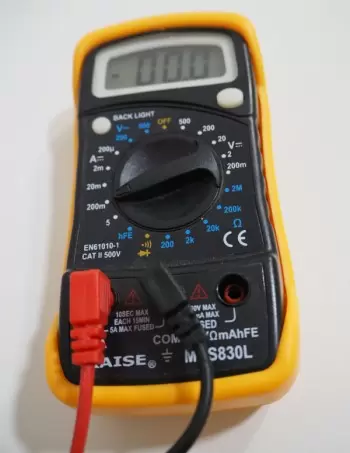
To obtain a correct measurement, the ammeter must be connected in series with the element to be analyzed, so that all the electrical current passes through the instrument.
Currently clamp meters are also used, which allow the intensity to be measured without interrupting the electrical circuit, facilitating maintenance and diagnostic tasks.
Electric Current Intensity Formula
Electric current intensity is defined as the amount of electrical charge that passes through a section of a conductor per unit of time.
Where:
-
I = current intensity (A)
-
Q = electric charge (C)
-
t = time(s)
This formula indicates that the intensity increases when a greater amount of electric charge circulates during the same interval of time.
Electric Power Generation
Electric current occurs when there is a difference in electrical potential or voltage between two points in a circuit. This potential difference generates a force that drives the movement of electrons through a conductive material.
For there to be circulation of electric current, it is necessary to have a closed circuit that allows the continuous movement of the loads.
The main sources of electricity generation are the following.
Electric generators
Generators and alternators convert mechanical energy into electrical energy through the phenomenon of electromagnetic induction. They are used in hydroelectric, thermal and wind power plants.
Batteries
Batteries produce electricity through chemical reactions that generate a potential difference between their terminals. They are a source of direct current widely used in electronic devices and energy storage systems.
Photovoltaic solar panels
Solar panels convert solar radiation into electricity using the photovoltaic effect. When sunlight hits the photovoltaic cells, the electrons are set in motion and generate a continuous electric current.
This technology forms the basis of solar photovoltaic installations used in homes, businesses and industrial facilities.
Power Plants
Hydroelectric, thermal and nuclear power plants use different energy sources to drive turbines connected to electric generators capable of producing large amounts of electric current.
Direct current and alternating current
Depending on the way electrons circulate, electric current can be classified into two broad types.
Direct Current (DC)
In direct current, electrons always move in the same direction.
It is the type of current generated by:
- Photovoltaic solar panels.
- Batteries.
- Batteries.
- Electric vehicles.
Most energy storage systems work with direct current.
Alternating Current (AC)
In alternating current, the direction of current circulation changes periodically.
It is the current supplied by the conventional electricity grid and used in most homes, businesses and industries.
In Europe, the standard frequency is 50 Hz, which means that the current changes direction 50 times per second.
Differences Between Current and Voltage
Current intensity and voltage are different concepts, although they are closely related within any electrical circuit.
Current intensity indicates the amount of electrical charge that is circulating through the conductor.
Voltage or electrical voltage represents the potential difference that drives the movement of electric charges.
A simple comparison is to imagine a water pipe:
-
The voltage would be the pressure of the water.
-
The intensity would be the flow that circulates through the pipe.
Therefore, the voltage provides the necessary force for the circulation of electric current.
Ohm's Law: Relationship Between Current, Voltage, and Resistance
Ohm's Law is one of the fundamental principles of electricity and establishes the relationship between current intensity, electrical voltage and resistance.
Where:
-
V = voltage or electrical voltage (V)
-
I = current intensity (A)
-
R = electrical resistance (Ω)
According to this law:
-
The higher the voltage, the higher the current intensity.
-
The higher the resistance, the lower the current intensity.
Ohm's Law is essential for the design and calculation of electrical installations, photovoltaic systems and electronic equipment.
Relationship between current intensity and electrical power
In electricity and solar energy, it is very common to relate current intensity to electrical power.
Electrical power is calculated using the following expression:
Where:
- P = electrical power (W)
- V = voltage (V)
- I = current intensity (A)
This formula allows you to calculate the power consumed or generated by an electrical equipment based on its voltage and intensity.
For example, a solar panel that produces 400 W and works at a voltage of 40 V generates approximately 10 A of electrical current.
Examples of Amps in Electrical and Solar Installations
Current intensity can vary considerably depending on the equipment or installation being tested.
| Equipment or Installation | Approximate intensity |
|---|---|
| 10 W LED bulb | 0.04 A |
| Home router | 0.1 to 0.5 A |
| TV | 0.5 to 1.5 A |
| USB charger for mobile phone | 1 to 3 A |
| Domestic refrigerator | 1 to 4 A |
| Washing machine | 4 to 10 A |
| Electric griddle | 6 to 12 A |
| Electric oven | 10 to 15 A |
| Standard Home Circuit | 10 to 20 A |
| Electric vehicle charging point | 16 to 32 A |
| 400W photovoltaic solar panel | 10 to 13 A |
| Residential Solar Inverter | 20 to 60 A |
| Industrial Facility | Hundreds of amps |
| High voltage transmission line | Thousands of amps |
These values are indicative and may vary depending on the power, voltage and operating conditions of each device.
Current Intensity in Photovoltaic Solar Panels
Current intensity is one of the most important parameters in any photovoltaic installation. Their value determines the sizing of cables, protections, charge controllers, batteries and inverters.
For example, a 550 W solar panel with a working voltage close to 42 V can generate around 13 A of current. When several solar panels are connected in parallel, the intensities add up, increasing the total current of the system.