 Solar Energy
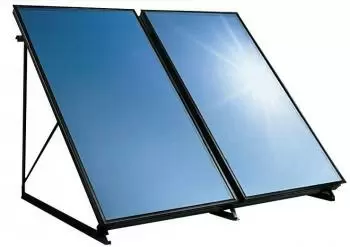
Low-temperature solar thermal energy is a technology that makes it possible to take advantage of the sun's radiation to generate useful heat in an efficient and sustainable way. In this context, it refers to systems that usually work below 100 °C, mainly intended for uses such as the production of domestic hot water (DHW), building heating and auxiliary applications such as swimming pool heating or certain thermal processes with low energy requirements.
It is a particularly suitable solution for reducing conventional energy consumption, as it directly transforms solar energy into thermal energy that can be used in domestic, tertiary and even industrial installations, contributing to energy efficiency and the reduction of emissions.
Working Principle
The operation of a solar thermal system is based on the capture of solar radiation by means of collectors, which transform this energy into heat. This process occurs thanks to an absorbing surface that heats up when it receives radiation from the sun.
The heat generated is transferred to a heat transfer fluid that circulates inside the collector. This fluid transports the thermal energy to an accumulation or consumption system, where it is used directly or stored for later use.
The thermal behaviour of the system is based on the so-called greenhouse effect: solar radiation passes through a transparent cover, heats the absorber plate and the heat is partially retained inside, reducing losses to the outside.
Types of Solar Collectors
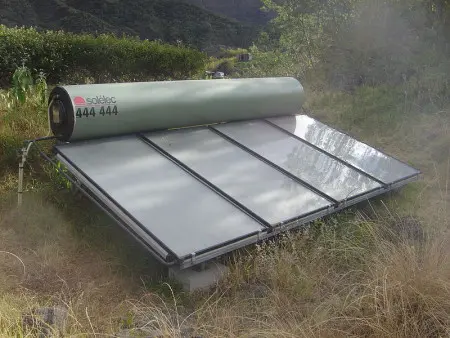
The most common is the flat solar collector, widely used in DHW and heating installations. It is made up of an absorbing metal plate that captures solar radiation and transmits it to the fluid that circulates through a system of tubes. Its design is robust, efficient and relatively low cost.
In applications where higher throughput is required or where climatic conditions are more demanding, vacuum tube manifolds are used. In this case, the thermal insulation is improved by vacuum chambers that significantly reduce heat losses, allowing for more efficient operation in low outdoor temperatures.
For applications with low thermal demand, such as pool heating, collectors without a glass cover are also used. These systems are simpler and cheaper, as they prioritise direct solar energy capture over thermal retention.
Solar Thermal System Components
A solar thermal system is made up of a set of elements that work in a coordinated manner to capture, transport and store thermal energy.
The main element is the solar collector, responsible for transforming solar radiation into heat. This is complemented by a hydraulic circuit through which the heat transfer fluid circulates, responsible for transporting the thermal energy to the point of consumption.
The system also incorporates an accumulator, which allows the hot water produced to be stored for later use, guaranteeing availability even in the absence of solar radiation. Many installations include a heat exchanger, which separates the solar circuit from the consumption circuit, improving the safety and efficiency of the system.
Finally, the regulation and control systems manage the overall operation of the installation, optimising the capture and use of solar energy according to demand and environmental conditions.
Solar thermal applications
The most widespread application of solar thermal energy is the production of domestic hot water. In this case, the system can easily reach domestic temperatures, usually around 45°C, allowing for a significant reduction in conventional energy consumption.
Another relevant application is the heating of buildings using low-temperature systems. This type of installation is particularly efficient when combined with systems such as underfloor heating, which work with low supply temperatures, in the order of 40 to 45 °C, perfectly compatible with solar thermal energy.
It is also common to use these systems for heating outdoor pools, where solar energy allows the season of use to be extended without the need to resort to conventional energy sources.
Advantages of solar thermal systems
Solar thermal systems offer multiple advantages from an energy, economic and environmental point of view. Firstly, they use a renewable, inexhaustible and clean source of energy such as solar radiation.
In addition, they allow for a significant reduction in fossil fuel consumption, which translates into a reduction in greenhouse gas emissions and energy costs in the long term.
Their operation is stable and low maintenance once installed, and they can be easily integrated with conventional systems, acting as a support or main system depending on the installation.
Finally, their versatility allows them to be applied in different areas, from single-family homes to tertiary buildings or sports facilities.