 Solar Energy

Thermal energy is the energy that is released in the form of heat. It is also known as heat energy and is present in all bodies due to the movement of its particles.
From the point of view of thermodynamics, thermal energy is part of the internal energy of a system, and is directly related to its temperature. The higher the temperature of a body, the greater the agitation of its particles and, therefore, the greater its thermal energy.
What is thermal energy?
Thermal energy is defined as the internal energy associated with the movement of particles (atoms and molecules) in a system. This energy depends mainly on:
- Body temperature
- The amount of matter
- The nature of the material
When a body gains thermal energy, its particles move faster; when it loses it, its movement decreases.
This type of energy is transferred from one body to another in the form of heat, always from the hottest body to the coldest.
According to the accepted scientific definition, thermal energy is directly related to the internal energy of a thermodynamic system. You can find a detailed definition of this concept in Britannica: Thermal energy definition .
Origin of thermal energy
 Thermal energy can be generated from multiple physical and chemical processes. It is not a primary energy, but a form of energy that appears as a result of other energy transformations.
Below are some examples of sources and processes that produce thermal energy:
- Solar radiation: the Sun heats the earth's surface (solar thermal energy).
- Geothermal energy: heat from the Earth's interior.
- Chemical reactions: especially the combustion of fuels (coal, gas, oil).
- Nuclear energy: Release of heat in nuclear fission or fusion processes.
- Electrical energy: generation of heat by Joule effect (electrical resistances).
- Mechanical friction: heat generated by friction between bodies (brakes, machinery).
- Biological processes: living beings generate heat through metabolism.
These examples show that thermal energy is present in many everyday and industrial processes, and that it can be obtained from different forms of energy.
Uses and applications of thermal energy with examples
Thermal energy has multiple applications in everyday life, industry, and power generation. It can be used directly as heat or transformed into other forms of energy, such as mechanical or electrical. Its main uses are presented below with representative examples.
Heating and air conditioning (examples: radiators, underfloor heating, boilers)
One of the most common uses of thermal energy is space heating. It is used to maintain a comfortable temperature in homes, buildings and public spaces.
This heat is generated by systems such as boilers, radiators or underfloor heating, which distribute thermal energy efficiently in the environment.
Cooking and domestic use (examples: ovens, hobs, hobs)
Thermal energy is also essential in daily life for food preparation and water heating.
It is used in gas stoves, electric ovens, ceramic hobs or water heaters, where energy is directly transformed into useful heat.
Industrial processes (examples: furnaces, foundry, glass manufacturing)
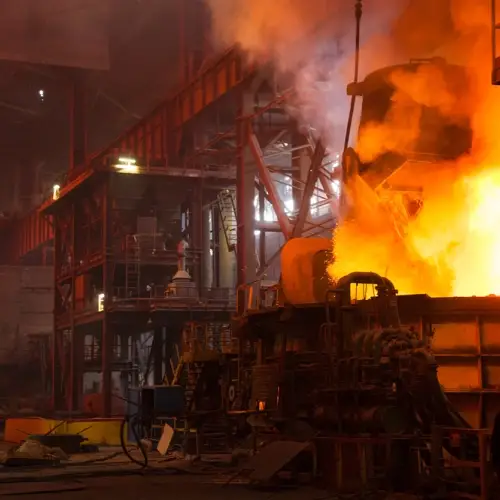 In industry, thermal energy is essential for multiple material transformation processes.
It is used in industrial furnaces, metal smelting, cement production, or glass manufacturing, where high temperatures are required to modify the properties of materials.
Heat engines (examples: cars, planes, ships)
Thermal energy can be transformed into mechanical energy by means of heat engines.
This occurs in internal combustion engines, where the heat generated by the combustion of the fuel is converted into motion, such as in cars, planes or ships.
Electricity production (examples: thermal, nuclear and geothermal power plants)
One of the most important uses on a large scale is the generation of electricity.
In thermal, nuclear or geothermal power plants, heat is used to produce steam that drives turbines connected to electric generators, transforming thermal energy into electricity.
Refrigeration and reverse air conditioning (examples: air conditioning, heat pumps)
Although it may seem counterintuitive, thermal energy is also present in cooling systems.
Air conditioning and heat pumps work by transferring heat energy, pulling heat out of a space to cool it or redistributing it as needed.
Biological and natural processes (examples: human metabolism, body regulation)
In living beings, thermal energy is present in biological processes such as metabolism.
The human body, for example, constantly generates heat to keep its temperature stable, which allows the organs to function properly.
Conversion of thermal energy into mechanical energy

When heating a gas in a container:
- Increases the kinetic energy of its particles
- Increased pressure on vessel walls
- Gas can expand and perform work
This principle is what allows the operation of heat engines, such as internal combustion engines.
In this process, thermal energy is converted into mechanical work by expanding the gas, demonstrating how energy can be transformed from one form to another.
Conversion of thermal energy into electricity
 Thermal energy can also be transformed into electrical energy, which is essential for large-scale electricity production.
This conversion is carried out in different types of installations:
- Conventional thermal power plants: use coal, oil or natural gas.
- Nuclear power plants: they generate heat through nuclear reactions.
- Geothermal plants: they take advantage of the internal heat of the Earth.
- Solar thermal plants: they use solar radiation to generate heat.
In all these cases, the heat is used to generate steam, which moves a turbine connected to an electric generator.
Environmental Impact of Thermal Energy
Thermal energy itself does not pollute, but its environmental impact depends on how it is obtained.
Some sources can generate negative effects:
- Fossil fuels: they emit carbon dioxide (CO₂) and pollutants.
- Nuclear energy: produces radioactive waste.
- Energy installations: they occupy large areas of land.
- Accident risks: such as oil spills or industrial leaks.
On the other hand, sources such as solar thermal or geothermal energy have a much lower impact, making them more sustainable alternatives.
Units of measurement of thermal energy
Thermal energy is measured in joules (J) in the International System of Units. However, it is also common to use other units:
- Calorie (cal): The amount of energy needed to raise the temperature of 1 gram of water by 1 °C.
- Equivalence: 1 calorie ≈ 4.18 joules
These units are especially used in scientific, technical and nutritional contexts.