 Solar Energy

Solar energy has established itself as one of the most important alternatives to fossil fuels. More and more homes, companies and even governments are betting on this technology to generate energy in a clean way.
However, like any energy source, it is not perfect. Therefore, before making a decision, it is advisable to know both its benefits and its limitations.
In addition, it is important to remember that there are two main types of solar energy:
- Photovoltaic solar energy, which generates electricity
- Solar thermal energy, which produces heat (hot water or heating)
From here, we analyze its advantages and disadvantages in a clear and objective way.
Advantages of solar energy
A renewable and sustainable source of energy
The main advantage of solar energy is that it comes from the Sun, a practically inexhaustible source on a human scale. Unlike fossil fuels, it is not depleted with use, making it a long-term sustainable solution.
Clean, environmentally friendly energy
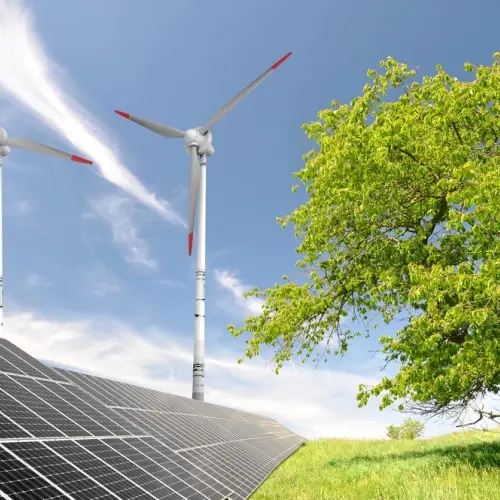 During operation, solar systems do not generate polluting emissions or greenhouse gases. This significantly reduces the environmental impact and contributes to curbing climate change.
In addition, their use reduces dependence on more polluting energy sources.
Savings over time
Although the initial installation can be a significant investment, solar energy can considerably reduce the electricity bill in the medium and long term.
Among its main economic benefits are:
- Reduced dependence on the electricity grid
- Protection against energy price rises
- Possibility of amortizing the investment in a few years
Easy maintenance and low operating cost
Another strong point is that solar systems require very little maintenance. In most cases, regular cleaning and basic checks are sufficient.
As it has no moving parts, wear is minimal, which reduces breakdowns and extends its useful life.
Ideal solution for isolated areas
Solar energy is especially useful in places where the power grid does not reach. In these cases, installing solar panels may be the most efficient and economical option.
It is commonly used in:
- Rural housing
- Agricultural facilities
- Shelters or remote areas
Quiet and discreet operation
Unlike other renewable energies, such as wind, solar systems work without generating noise. This makes them particularly suitable for residential environments.
High application versatility
Solar energy is not only used to generate electricity. It can also be used in multiple contexts, making it a highly versatile technology.
For example:
- Electricity production in homes
- Domestic hot water
- Irrigation systems
- Electrification of isolated areas
Disadvantages of solar energy
Limited efficiency compared to other sources
One of the main drawbacks is that solar panels don't convert all solar energy into electricity. Its efficiency, although it has improved, is still lower than that of other energy sources.
This implies that a relatively large surface area is needed to generate significant amounts of energy.
High initial investment
The cost of installation is still a barrier for many people, especially in large or battery-powered systems.
Even so, this cost is compensated over time thanks to energy savings.
Dependence on weather conditions
The performance of a solar installation depends directly on the amount of solar radiation available. Factors such as cloud cover, rain, or geographic location can affect production.
On cloudy days, power generation decreases significantly.
Intermittent production
Solar energy is only generated during daylight hours. This causes a lag between when energy is produced and when it is needed, especially at night.
Need for storage systems
 To take advantage of energy outside of solar hours, it is necessary to resort to batteries or other storage systems.
Currently, these systems have some drawbacks:
- High cost
- Limited shelf life
- Environmental impact in its manufacture
Requires available space
Solar installations, especially on a large scale, need large surfaces. This can be a limitation in urban environments or have an impact on land use.
Indirect environmental impact
Although solar energy is clean during use, it is not completely free of environmental impact.
Some aspects to take into account are:
- Manufacture of the panels
- The use of materials and resources
- End-of-life waste management
Conclusion: is it really a good option?
Solar energy has some limitations, especially related to efficiency, initial investment, and weather dependence. However, its advantages clearly outweigh its disadvantages.
Its renewable nature, its low environmental impact and its ability to generate savings make it one of the best energy alternatives available today.
With the advancement of technology, it is very likely that many of its drawbacks will be further reduced in the coming years.