 Solar Energy

Photovoltaics are one of the most popular and accessible ways to harness the Sun's energy. More and more households and businesses are turning to this technology to generate their own electricity in a clean and sustainable way.
But what exactly does "photovoltaic" mean? How do solar panels work? In this article we explain it to you in a simple way.
What does photovoltaic mean?
The term photovoltaic is used to describe everything related to the conversion of light into electricity.
It comes from two words:
- "Photo", which refers to light
- "Voltaic", related to electricity
Together, it describes the process of transforming the energy of sunlight into electrical energy.
What is the photovoltaic effect?
The photovoltaic effect is the physical phenomenon that makes this transformation possible.
When sunlight hits certain materials (such as silicon), electrons are released and an electric current is generated. This process occurs naturally and is the basis for the operation of solar panels.
What is solar photovoltaic energy?
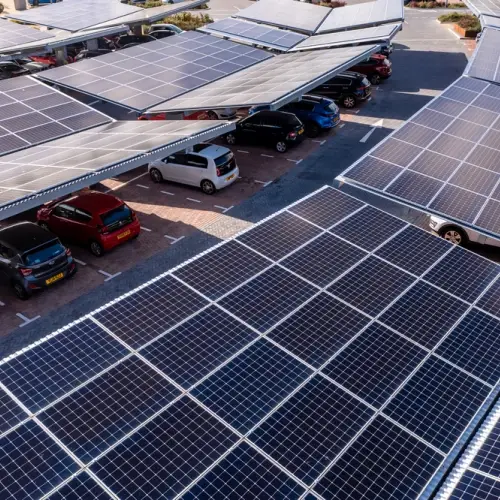 Photovoltaic solar energy is electricity that is obtained directly from solar radiation.
It is an energy with many advantages:
- Renewable: comes from the Sun
- Clean: does not generate polluting emissions
- Inexhaustible: available every day
Thanks to these characteristics, it has become a key player in the transition to a more sustainable energy model.
How do solar panels work?
Photovoltaic solar panels are made up of small units called solar cells.
Its operation is simple:
- Panels catch sunlight
- Solar cells generate electricity (direct current)
- An inverter transforms that electricity into alternating current
- The energy is used at home or fed into the grid
This whole process happens silently and automatically.
What is photovoltaic electricity?
Photovoltaic electricity is the electrical energy generated by the photovoltaic effect.
This type of electricity can be used to:
- Feeding homes
- Supplying energy to companies
- Integrate into the electricity grid
It's exactly the same electricity we use every day, but generated sustainably.
Types of photovoltaic systems
There are different ways to install solar systems according to needs:
Grid-Tied Systems
They are the most common. They are connected to the mains and allow:
- Consume your own energy
- Take advantage of the surplus generated
Isolated systems
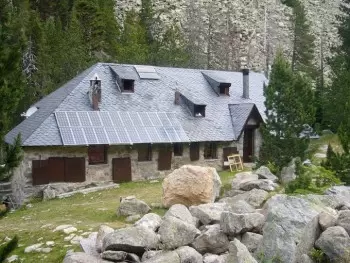
They are ideal for:
- Bed & Breakfast
- Remote areas
They need batteries to store energy.
Hybrid systems
They combine various energy sources (solar, wind, generators, etc.).
They offer greater independence and energy security.
Components of a photovoltaic system
A photovoltaic system typically includes:
- Solar panels: capture the Sun's energy
- Inverter: transforms electricity
- Batteries (optional): store energy
- Charge regulator: protects the batteries
- Control system: manages the entire system
Can it be combined with other energies?
Yes. It is common to combine photovoltaic energy with solar thermal energy, which is used to generate heat (hot water or heating).
This combination makes it possible to make even better use of the Sun's energy.
Conclusion
Photovoltaics are a simple, efficient and sustainable solution for generating electricity from the Sun.
Thanks to its easy installation and cost reduction in recent years, more and more people are opting for this technology to save on their electricity bills and reduce their environmental impact.