 Solar Energy

The Sun is much more than a bright star in the sky. It is the main generator of energy in the solar system and the element that makes life on Earth possible. Through nuclear fusion processes in its core, it releases an enormous amount of energy that travels to our planet in the form of light and heat, influencing practically all natural systems.
Without their constant presence, Earth would be a cold, dark, and uninhabitable world. Its impact goes far beyond what we perceive with the naked eye: it regulates the climate, drives natural cycles and sustains the base of all ecosystems. In this context, understanding what the Sun's function is and what the Sun's importance is for the Earth is key to understanding the functioning of the planet.
Light and heat: the basic conditions for life
The most obvious importance of the Sun lies in its ability to provide light and heat. Solar radiation warms the earth's surface and maintains temperatures compatible with life. Without this thermal equilibrium, water could not be maintained in a liquid state and life as we know it would not exist.
This is one of the main benefits of the Sun for the planet, as it allows the necessary conditions for the existence of ecosystems to be met.
Sunlight, on the other hand, is essential for photosynthesis, the process by which plants transform the sun's energy into food and release oxygen into the atmosphere. This mechanism not only sustains plant life, but forms the basis of the entire food chain of the planet.
In addition, solar energy influences the movement of air and oceans, generating dynamics that regulate the global climate.
Benefits of the Sun for Planet Earth

In addition to its role in natural processes, the Sun's energy is key to the development of renewable energies such as solar photovoltaic, wind and hydropower, as it directly or indirectly influences their origin. This makes the Sun an essential element not only to maintain ecosystems, but also to move towards a cleaner and more sustainable energy model.
The Sun's Influence on Climate
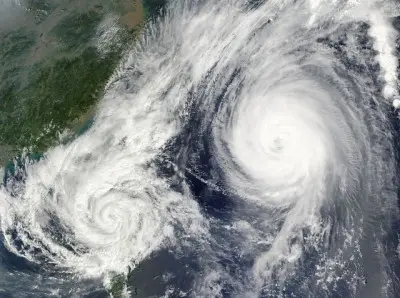
The amount of solar radiation that reaches Earth varies throughout the year due to the tilt of the Earth's axis of rotation and its elliptical orbit around the Sun. These seasonal changes in solar radiation are responsible for the seasons of the year and have a direct impact on weather patterns, such as the formation of rainy seasons, droughts, and extreme weather events.
In addition, the Sun also influences long-term weather phenomena, such as ice ages and warm periods. Variations in solar activity, such as the 11-year solar cycle, can have a significant impact on Earth's climate, affecting global temperature and precipitation patterns.
A planet in balance thanks to the Sun
The Sun is the great regulator of the Earth's natural systems. Its energy keeps the global temperature at adequate levels, drives the water cycle and allows the formation of stable ecosystems.
The water cycle depends directly on solar radiation: the Sun's heat causes the evaporation of water from oceans, rivers and lakes, which then condenses in the form of clouds and returns to the surface in the form of rain or snow. This process is essential for the availability of fresh water on the planet.
When we ask ourselves how the energy of the Sun reaches the Earth, the answer lies precisely in this radiation that travels through space and triggers all these natural processes.
Likewise, the Sun acts as an indirect base for multiple energy sources. Wind energy originates from temperature differences caused by solar radiation, hydropower depends on the water cycle driven by the Sun, and fossil fuels come from organic matter that stored solar energy through photosynthesis for millions of years.
The Sun as an engine of climate and seasons
The earth's climate is directly conditioned by solar energy. The tilt of the Earth's axis and its movement around the Sun cause variations in the amount of radiation received throughout the year, giving rise to the seasons.
These variations explain how the Sun influences plants and animals, as they determine the rhythms of growth, reproduction and behavior of living beings.
In the long term, changes in solar activity can also influence global climate cycles. In this sense, the Sun not only sets the rhythm of day and night, but also the Earth's climatic behavior.
The origin of energy on Earth
Beyond its role in natural processes, the Sun is the basis of most of the planet's energy sources. Its influence extends to both renewable and non-renewable energies.
Wind energy depends on winds generated by the uneven heating of the atmosphere. Hydropower is linked to the water cycle, which is driven by solar evaporation. Even fossil fuels have their origin in organisms that, at the time, stored energy from the Sun through photosynthesis.
Therefore, when the importance of the Sun in the solar system is analyzed, its role as the energetic origin of practically everything we know is also understood.
A star that sustains the balance of the solar system
In addition to its impact on Earth, the Sun exerts a gravitational force that keeps the planets of the solar system in orbit. This orbital stability allows the Earth to maintain constant conditions over time, which is essential for the development of life.
Here too a frequent question is answered: what is the function of the Sun, which is not only energetic, but also gravitational within the solar system.
Conclusion
The Sun is not only a source of light: it is the central axis that sustains the physical, biological and energetic processes of the planet. Its influence extends from the respiration of ecosystems to the functioning of the climate and the generation of energy.
Understanding its importance not only helps to value its role in nature, but also to understand why the benefits of the Sun for the planet are fundamental and why renewable energies based on its radiation are key to the Earth's energy future.