 Solar Energy

Global warming is one of the most pressing challenges of our time. As the planet experiences a steady rise in temperature, its effects are becoming increasingly apparent around the world.
In this article, we will discuss global warming, its definition, causes, consequences, how it affects human beings, and the forms of prevention we should consider.
Definition of global warming
Global warming is a term used to describe the long-term increase in the Earth's average temperature.
Despite natural fluctuations in temperature, the scientific consensus is that human activity, particularly the emission of greenhouse gases, is the main cause of global warming. These gases trap the sun's heat in the atmosphere, creating a greenhouse effect that increases the Earth's temperature.
Causes of global warming
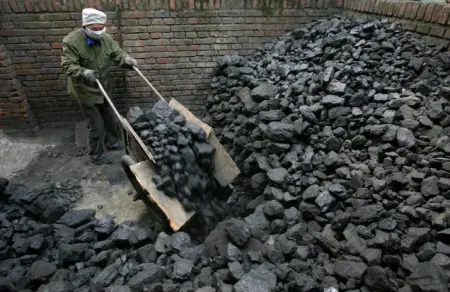
Today's global warming is mainly caused by the increase in the concentration of greenhouse gases in the atmosphere due to human activities.
This phenomenon has been widely documented by the international scientific community, especially by the Intergovernmental Panel on Climate Change (IPCC), which concludes with a high level of certainty that human influence is the dominant cause of the warming observed since the mid-twentieth century.
IPCC – Sixth Assessment Report (AR6)
The main sources of emissions are:
Burning fossil fuels
The combustion of coal, oil, and natural gas to produce electricity, heat, and transportation is the largest source of carbon dioxide (CO₂) globally. This gas can remain in the atmosphere for centuries, contributing to long-term warming.
According to NASA, atmospheric CO₂ has increased by more than 40% since the pre-industrial era, reaching levels not seen in at least 800,000 years.
NASA Climate Change – Evidence
Deforestation and land-use change
Forests act as carbon sinks, absorbing CO₂ from the atmosphere. Deforestation not only reduces this capacity, but also releases the carbon stored in plant biomass.
The FAO notes that forest loss contributes significantly to global greenhouse gas emissions.
FAO – Global Forest Resources Assessment
Intensive agriculture and livestock farming
Industrial agriculture contributes through methane (CH₄) emissions from livestock and nitrous oxide (N₂O) derived from fertilizers. Methane is especially relevant because it has a much higher warming potential than CO₂ in the short term.
Industrial Processes & Refrigerants
Industry emits fluorinated gases (HFCs), which have a global warming power thousands of times greater than CO₂. Although its concentration is lower, its climate impact is very significant.
EPA – Greenhouse Gas Emissions Overview
Consequences of global warming
Global warming is already causing observable changes in the planet's natural and human systems. According to NOAA and the IPCC, many of these effects are increasing in frequency and intensity.
NOAA Climate Change Indicators
Rising global temperatures and extreme events
The increase in global average temperature has intensified extreme weather events such as heat waves, more intense storms, forest fires and prolonged droughts.
The IPCC confirms that these events are increasingly likely due to human-induced climate change.
IPCC – Extreme weather and climate events
Melting glaciers and rising sea levels
Rising temperatures are causing accelerated ice loss in Greenland, Antarctica and mountain glaciers. This directly contributes to sea level rise.
NASA has documented an acceleration in the loss of ice mass in recent decades.
NASA – Ice melt and sea level rise
Impacts on human health
Climate change directly affects public health. The WHO warns that it increases the risk of respiratory and cardiovascular diseases, heat stroke and the spread of vector-borne diseases such as dengue or malaria.
WHO – Climate change and health
Loss of biodiversity
Global warming alters entire ecosystems, forcing many species to migrate or adapt rapidly, increasing the risk of extinction.
The IPCC estimates that up to one million species are at risk due to climate change and other environmental factors.
IPCC – Biodiversity and climate change
Socio-economic impacts
The economic consequences include damage to infrastructure, crop failure, increased health costs and population displacements due to extreme weather events or rising sea levels.
The World Bank estimates that millions of people could be displaced in the coming decades if adaptation measures are not taken.
World Bank – Climate Change Overview
Impact on humans
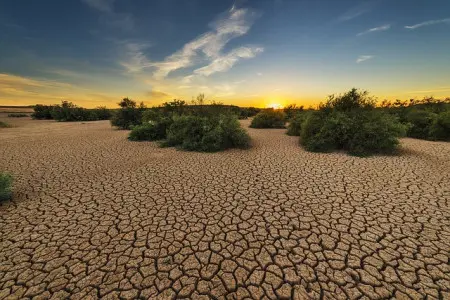
- Threat to food security: Climate variability and droughts can reduce crop production, jeopardizing food availability.
- Increase in vector-borne diseases: Climate change may expand the reach of vector-borne diseases such as dengue and malaria, threatening people's health.
- Population displacement: As sea levels rise and extreme weather events increase, coastal communities are forced to move, which can lead to conflict and humanitarian crises.
- Threat to the economy: Economic losses due to extreme weather events, environmental degradation, and dwindling natural resources can negatively affect the global economy.
Ways to prevent and mitigate global warming
To address global warming, it is crucial to take meaningful and effective action. Here are some prevention and mitigation strategies:
- Transition to clean energy sources: Encouraging the use of renewable energy, such as solar and wind power, will reduce dependence on fossil fuels and decrease CO₂ emissions.
- Energy efficiency: Improving energy efficiency in buildings, transport and industry will reduce greenhouse gas emissions.
- Forest conservation: Protecting and restoring forests is essential to reduce CO₂ emissions and maintain biodiversity.
- Sustainable agriculture: Promoting sustainable agricultural practices, such as conservation agriculture and reducing food waste, can reduce methane and nitrous oxide emissions.
- Government policies: Governments can implement international regulations and agreements to limit greenhouse gas emissions and promote research and development of clean technologies.
- Education and public awareness: Informing society about global warming and its effects can increase support for mitigation actions and encourage changes in individual behavior.
- Investment in clean technology: Investment in carbon capture and storage technologies, as well as sustainable transport, can accelerate the transition to a cleaner economy.
Solar energy: an example of prevention
Photovoltaics and solar thermal play a very important role in preventing climate change by providing sustainable solutions for power generation.
Photovoltaic energy
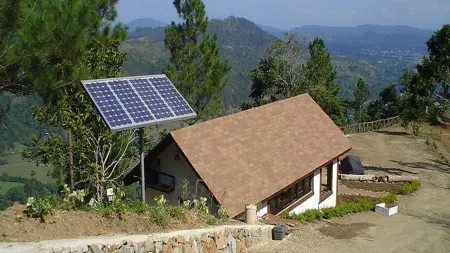
In addition, photovoltaic technology is versatile and can be implemented in a variety of applications, from residential installations to large-scale projects.
Solar thermal energy
On the other hand, solar thermal energy harnesses the sun's heat to generate electricity or provide heating and hot water. This reduces the need for fossil fuels for thermal applications, thus reducing emissions of CO₂ and other polluting gases.
Conclusion
Global warming is a global crisis that affects every aspect of life on Earth. Its main cause is human activity, and its consequences are already evident in the form of extreme climate changes, loss of biodiversity and threats to food security and human health.
However, through prevention and mitigation, we can address this problem effectively. The transition to a more sustainable economy and the adoption of environmentally friendly practices are essential to curb global warming and protect our planet for future generations.
Action is urgent, and as a global society, we must take action now to address this crisis.